
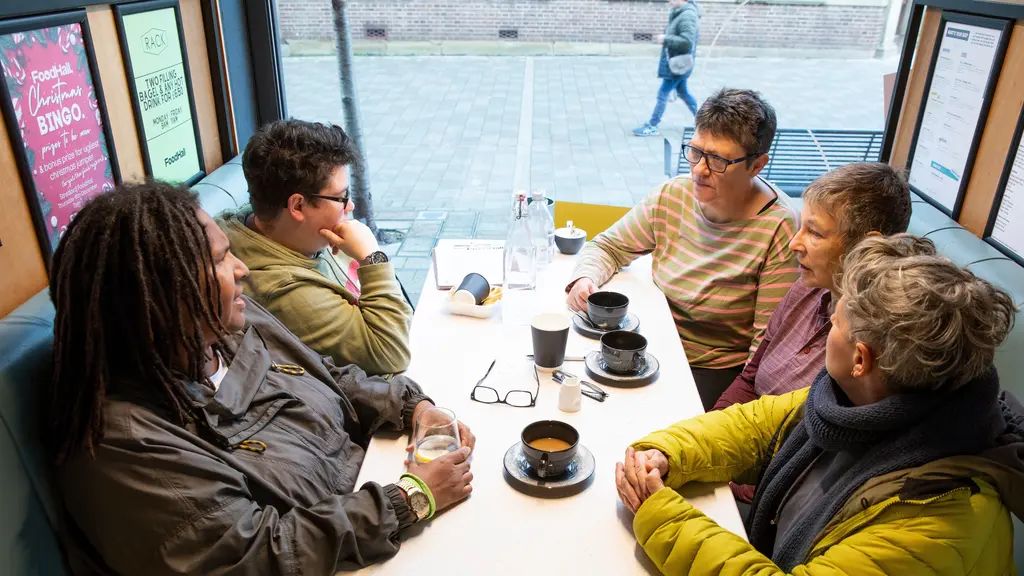
Hosting a discussion about ageism
Share:




If you have the time, you might decide that you’d like to host a discussion or workshop in your community, workplace, or amongst friends and family to talk about ageism. You could time the discussion to coincide with Age Without Limits Day, International Day of Older People, or at a time which suits you and your participants best.
- What is the purpose of the discussion? Ideas include raising awareness, sharing experiences, challenging stereotypes and identifying actions.
- Who is the discussion for? Consider mixed ages, a specific age group, colleagues, neighbours, family, friends and community.
- What level of knowledge or experience might participants have? Are they new to the topic or already engaged?
- How long do you have?
- What feels appropriate for this group? Think about different formats including an informal chats, workshops and story-sharing.
- What do you want people to leave with? Will they leave with new insight, empathy, ideas to take action…or something else?
Tip: It’s okay if the goal is starting a conversation, not 'solving' ageism.
- Informal discussion: A guided conversation with a few prompts
- Story-sharing: People sharing personal experiences of ageism
- Workshop-style session: Short input followed by small group discussions
- Intergenerational dialogue: Mixed-age groups talking together
- Hybrid or online session: Useful for accessibility or wider participation
- A larger public meeting: Invite a small panel of speakers such as local councillors or MPs, along with professionals from local organisations and services. If you are part of an Age-friendly Community invite a representative along!
Things to consider:
- Group size: Smaller groups often feel safer for personal sharing
- Accessibility: Venue, timing, online options, language used
- Whther ground rules are needed: Listening respectfully, no interruptions
- A mix of all ages or a specific age group, such as people over 50?
- Invite people of different backgrounds and experiences – people experience ageism differently
- Ensure the space will feel welcoming for everyone.
- Decide if the discussion is:
- Open to all
- Invitation only
- Targeted to a specific group
Tip: It’s not necessary to be an 'expert' - curiosity and respect are enough.
- Welcome and purpose: Why you’re here
- Set the scene: What ageism is and why it matters
- Discussion: Guided questions or small-group chats
- Reflection: What stood out or surprised people
- Close: Key takeaways and thanks
Asking open-ended questions encourages people to think deeply and share their own perspectives for an interesting discussion. You may want to choose a few, not all of the following:
Personal experience
- When have you noticed assumptions being made about age - your own or others’?
- Have you ever felt treated differently because of your age?
Societal attitudes
- What stereotypes about different age groups do you notice most often?
- Where do these ideas come from - media, workplace culture, family expectations?
Intergenerational perspectives
- How do different generations misunderstand each other?
- What could different age groups learn from one another?
Workplace or community focus
- How might ageism show up in recruitment, promotion, or social settings?
- What does an age-inclusive workplace, community or social setting look like?
Reflection
- Have any of your own assumptions been challenged?
- What feels hardest to talk about when it comes to age?
Think about what comes next:
- Invite participants to:
- Share one insight they’re taking away
- Name one small action they could try
- Consider gathering feedback:
- What worked well?
- What could be improved?
- Share resources or further reading
- Key Age Without Limits website pages
- Material people can refer to after the session and keep the conversation going.
- Encourage ongoing conversations:
- Follow-up meetings
- Informal check-ins
- Bringing the topic into other spaces (work, family, community groups)
Tip: Change often starts with small shifts in awareness and language.
Looking for more information about hosting a successful event? Explore our events webpage here for inspiration.
Looking for more information about ageism before hosting a discussion? Find tips and information about ageism here to familiarise yourself with its impact and increase your confidence to guide conversation.